0755-86543082
As the Middle East becomes a cross-border hot spot, local taxes are making waves again
Author:安博国际财税(深圳)有限公司
Click:
Time:2020-06-12 09:26:22
After India and Southeast Asia, the Middle East market is the next cross-border blue ocean. This mysterious land of oil and rich people is also witnessing a surge in consumption from offline to online during the pandemic.
Nearly 55% of Saudi Arabian consumers bought necessities such as groceries online in April, up from 6% before the outbreak, according to the Choueiri Group's latest statistics. Among them, local online retailer BinDawood Holding, which owns two major e-commerce platforms, BinDawood and Danube, noted that since the COVID-19 crisis escalated in late March, its average sales have increased by 300%, while average order value and app installs have increased by 50% and 400%, respectively.
And Saudi grocery delivery app Nana recently benefited from the shift to online shopping, raising $18 million in a Series B funding round in late March. In addition to supermarket groceries and food, e-commerce demand for fitness supplies, office supplies, kitchen appliances and more is skyrocketing, and is expected to continue, given the Saudi government's decision to impose stricter curfews in cities. The outbreak could well be a historic opportunity for e-commerce in the Middle East.
However, as a major battleground in the Middle East, Saudi Arabia is considered to be one of the countries with the most difficult customs clearance in the world. Logistics, customs clearance and taxation are still the biggest obstacles to opening this new market. How to grasp this historic opportunity under all kinds of variables?

photo:consultancy-me
First, value-added tax skyrocketed 3 times, severely hit the Middle East market
During the outbreak, the economic situation has also changed dramatically. In recent days, oil prices in the international market have fluctuated greatly, and the Middle East market, which is highly dependent on oil, has been hit hard as a result. In early May, the Saudi government announced that it would suspend the payment of living allowances from June 1 and increase the value-added tax (VAT) from 5 percent to 15 percent, effective after July 1, in an effort to mitigate the economic impact of the pandemic.
This poses a dilemma for cross-border sellers looking to enter the Middle East: how profitable is the high tax market?
The increase in VAT affects more offline retail in the Middle East, so there are still more positive points for cross-border sellers. Like since the outbreak, according to the overseas professional data analysis found that the Middle East and north Africa regional business shopping, consumers are more inclined to electricity of which 48% of Saudi Arabia accounts for consumers than the highest, and young people are the main force of this change, they also occupy a significant portion of the population of this will be setting the stage for the subsequent economic growth.

Projected percentage growth in e-commerce spending in the Middle East, North Africa and South Asia by 2020
data source:statista
However, sellers entering the market in the crisis need to become more stable in all aspects, such as tax, when the local tax authority is further tightened, sellers need to be prepared on the road to compliance.
Focusing on VAT services in the Middle East, AMb has accumulated a large and stable customer base in Europe in recent years. And became Amazon Middle East station officially certified VAT service provider As well as EBay golden Eagle project officially recommends VAT service providers, Currently in Europe to expand the local company registration, accounting, tax processing and tax planning and other local business. At the same time, the enterprise the ember is also efficient end-to-end one-stop tax services the cross-border new blue ocean transplanted to the Middle East, three months ago the Saudi office began operations, in the Middle East cross-border customers to provide more convenient and efficient service, since the outbreak of the surge in demand for the Middle East customers, also has exposed some of the new tax problems.

Ember accounting firm partner Lisa Howe is mentioned in the interview a standing in the Middle East customers for registered didn't declare cause heavy fines, "the customers find us in March last year, said they were in before the agency registered the emirates id number but no declaration, then we found that their ein were take effect June 1, 2018, According to UAE rules, they had missed three filing periods and had to pay a fine of DH7,853.12, which is more than the tax."
Therefore, Lisa also warned that the UAE Tax Authority is very strict and imposes heavy fines on late registration and filing, especially for filing and paying taxes. Once there isa delay, there will be fines the next day. “Therefore, we have been strictly requiring customers and agents to prepare materials in advance without any delay to avoid unnecessary trouble and high penalty taxes.”
Two, overseas warehouse, tax generation, B2B, will encounter what pits?
With the current outbreak and trade war, problems in logistics and supply chains continue to escalate. Europe and the United States side, although the platform warehousing restrictions have liberalised, but dropped sharply international flights, or even face grounded, sky-high freight has baffled the seller, the Middle East market is also facing the same situation, passenger flights has stopped completely, also reduce many cargo flights, the position is very nervous, and air freight costs continue to rise, only by sea is relatively stable, As a result, many sellers have largely stopped shipping to middle Eastern markets, cutting off the road to logistics.
In Lisa's view, in a highly variable cross-border business environment, it's critical to have a multi-channel delivery model, such as using third party overseas warehouses or setting up your own overseas warehouses, but she also stresses, For now There is also increasing scrutiny of overseas warehouses, especially in Europe.
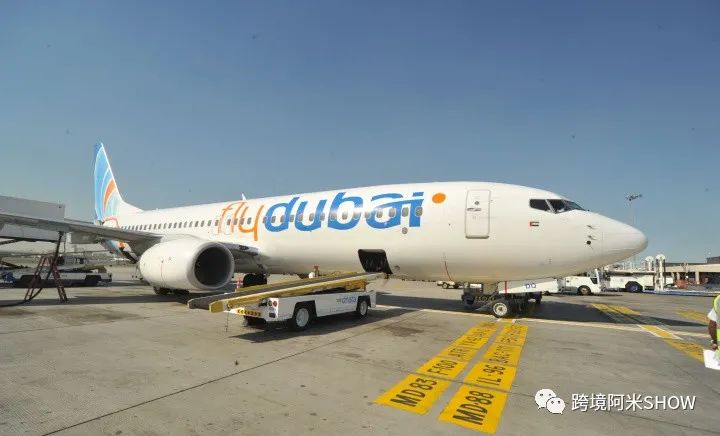
photo:logisticsmiddleeast
"We have a customer who works for an independent station in Poland. He has not registered for VAT before, so he adopted the method of double customs clearance. With the customs clearance of freight forwarder, he was lucky, thinking that the tax bureau does not know his existence, so he does not need to register and declare VAT. The result did not think that one day his overseas warehouse suddenly received a letter of tax bureau, the request to provide information to accept investigation, otherwise the warehouse is sealed up. He wondered if the tax bureau would go to the warehouse. After investigating, we found out that the tax bureau had learned about the warehouse's address in their advertisement and found out the problem was not registered." Therefore, in the local layout of overseas warehouse, also need to pay more attention to tax issues.
In addition, the situation of non-compliance at any link is likely to appear, such as in the tax agency, also frequently happened to make people incredible things. Lisa shared a case with us. "Last year, a client in France said that they always received letters from the tax bureau asking them to pay taxes, or cancel the tax number immediately, but their tax agent said that the letters might be done by fraudster, and they have followed up with the tax bureau to deal with it. He was really worried, so he changed a tax agent to check, so he found us, and found that his account had not been declared from September 2018 to February 2019, let alone paid taxes. Then where did all the taxes he paid go? After our audit, we found that the invoices and tax vouchers provided by the tax agent were all fake, so it was the previous tax agent who faked their taxes and then left."
To that end, Lisa warned, On the way to compliance, we should not only pay attention to our own problems, but also pay more attention to whether the tax agent itself is compliant.
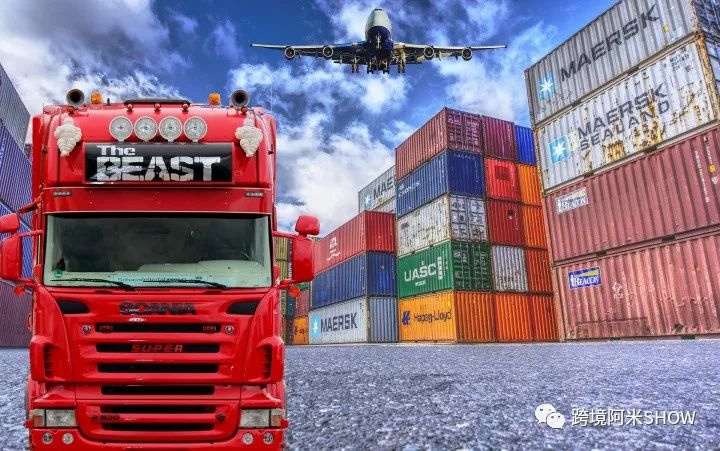
photo:logisticsmiddleeast
At the same time, due to the impact of the epidemic, online B2B trading has started to enter the "fast lane". This year's Canton Fair, once again connected to the Internet, has enabled more traditional foreign trade merchants and suppliers to enter the cross-border B2B circuit and gain new blue ocean markets.
In the B2B cross-border e-commerce market, there are also many "pits" in customs clearance and tax under the purchase order model. On the B2B purchasing side, Lisa also gave us a detailed description of the tax issues:
"B2B purchases are what we call EC Sales [Europe Customer Sales] purchase orders. Take Germany as an example, this order means that if the customer has registered the VAT number in the EU and sells to other businesses and merchants who are not in the country (Germany) and have the EU tax number, this part of sales should have zero tax rate, which is the so-called Reverse charge system. In a nutshell, B2B purchasing refers to the process of purchasing from buyers and merchants registered with VAT in Europe to sellers and merchants registered with VAT number in other European countries. This process also includes the delay of customs clearance, that is, when the goods from the Netherlands are imported to Germany, import VAT is not paid in Germany, and the tax refund of import VAT is not allowed when the goods are sold in Germany, so this situation is equivalent to the German tax number registered company making a B2B zero-tax purchase from the Customs clearance country Of the Netherlands. The equivalent of a Dutch seller(To apply for the Customs clearance deferred The country)B2B sales, soIn Germany, buyers are required to make B2B purchases, which also need to be reported in the VAT declaration and required to be submitted by the tax agent in the monthly/quarterly declaration."
【Copyright Note】This article is from the website Cross-border Amie SHOW(Website Address: www.amishow.com)And the official account cross-border Amishow(WeChat ID:amishow321)All original content published, including text, pictures, audio, video and other content.

点击右上角
分享给朋友吧







 Long by picture save/share
0
CONTACT NUMBER
UK headquarters:0044 7539916864
Shenzhen Branch:0755-86543082
Shanxi Branch:15364919691
Guangzhou office:17876663318

Official wechat:Amber-VAT
Copyright (©) 2023 Amber International Finance and Taxation (Shenzhen) Co., Ltd ICP:粤ICP备2021109668号
 QQ
QQ